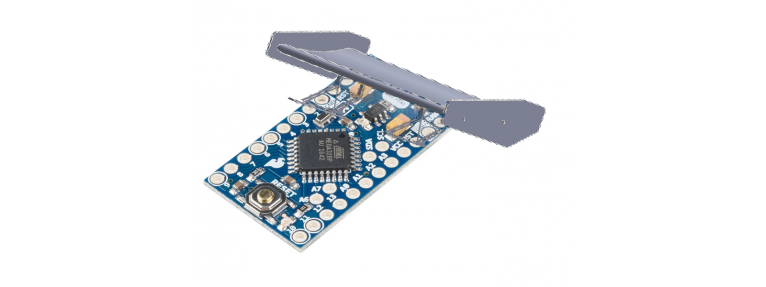

When you are working with ATmegas in TQFP packages, one of the really helpful things is a test socket, as shown in the picture above.
Continue readingCategory: Boards
Everything about boards, shields, breakouts, etc.
Avoiding Mysterious, Silent Failures of Your Arduino Sketch: Push PROGMEM to the far end
Have you ever used an Arduino Mega 2560 (or a similar board) and, at some point in the development process, experienced the LED mysteriously stopping to blink, garbled text being printed, or funny artifacts appearing in pictures? And all that without any apparent reason or any error or warning message? If you want to know what is behind it and how to solve this problem, read on.
Continue reading
Resurrecting Bricked AVRs
The featured picture of this post has been generated by Dall-E.
Three years ago, I wrote a short blog post about AVR fuses and what to do when you brick your MCU by setting the wrong fuse. This included a lot of jumper wires. In order to get rid of the jumper wires, I decided recently to design an Arduino shield that supports resurrecting bricked MCUs.
Continue reading
An IoT Badge Rack
If you own several badges, cards, or tickets and would like to automatically publish the number of unused badges on the web in real-time, there is no off-the-shelf solution. This post describes how to build such an IoT system.
Continue reading
Connecting the AVR-IoT Cellular Mini Board to the Internet
When you want to connect a sensor or actuator to the Internet and there is no WLAN around, then the next best option is LPWAN (Low-Power Wide Area Network). In this blog post, I will describe how to connect a sensor to a website using the AVR-IoT Cellular Mini board by Microchip.
Continue reading

Debugging 2.0
What keeps people from using a debugger? Well, it is mostly that one has initial costs in terms of setting up the debugging environment and of learning how to use the debugging tool. Hopefully, the next iteration of my hardware debugging tool dw-link, which is able to debug classic ATtinys and ATmegaX8s, will somewhat ease that burden, in particular, because you can buy the accompanying hardware now at Tindie.
Continue reading
Everything You Wanted to Know About Real-Time Clocks but Were Afraid to Ask
What is a real-time clock? Why do you need one? What are the use cases? How accurate can a real-time clock be? Which features can a real-time clock have? Which models are around? And which one should you buy?
Continue reading
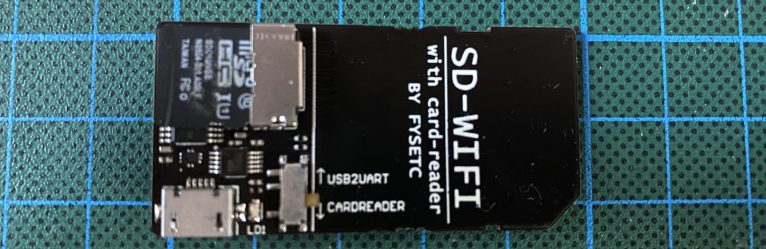
SD-WIFI by FYSETC: Wireless 3D printing
How do you communicate with your 3D printer? Carrying an SD card between your computer and the printer? This can end now using the SD-WIFI module! If you try to get it running on a Mac, some extra effort may be necessary.
Continue reading
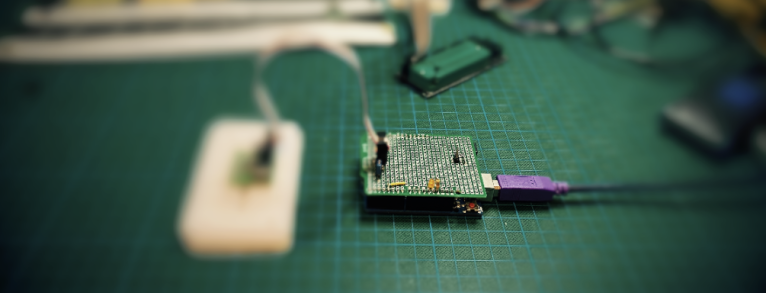
A debugWIRE Hardware Debugger for Less Than €10
Is it possible to build a hardware debugger for debugWIRE for less than €10? As it turns out, it is. You just have to make a few compromises and also do a bit of soldering and gluing.
Continue reading
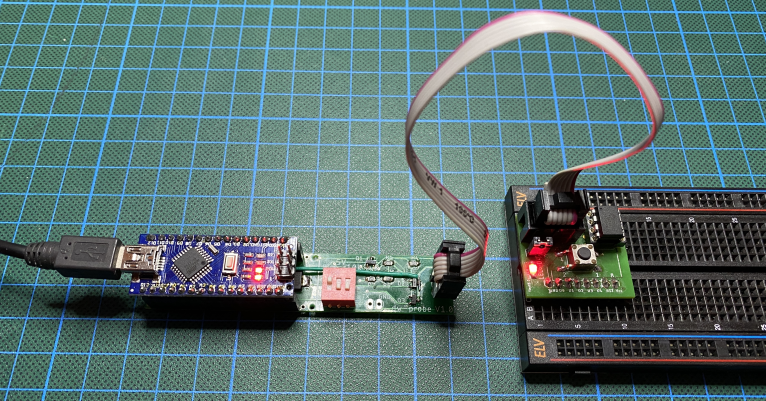
dw-probe: The Hardware for the Hardware Debugger
dw-link can turn your Arduino board into a hardware debugger, and dw-probe connects it to any target board.
Continue reading